
Most people hiring their first SDR in the Philippines are thinking about one thing: cost savings.
That’s the wrong starting point.
Yes, you can save up to 70% on labor costs compared to hiring locally in the US, UK, or Australia. The remote talent pool is deep and growing.
But here’s what actually determines whether a Filipino SDR hire works or doesn’t: what you hand them when they show up.
Are You Looking to Hire in the Philippines and Unsure Where to Start?
Sign up for an account and recruit your next employee within minutes!
Get StartedWhat a SaaS SDR Role Actually Includes Day to Day
An SDR in your pipeline handles the top-of-funnel execution layer. That’s it.
Prospect research. List building. Cold outreach via email and LinkedIn. Qualification calls. Appointment setting. CRM updates. Follow-up sequences.
The stuff that is absolutely critical to pipeline health but doesn’t require your AE or founder to be the one doing it.
That’s where Filipino remote workers genuinely shine. The work is repeatable, process-driven, and volume-dependent.
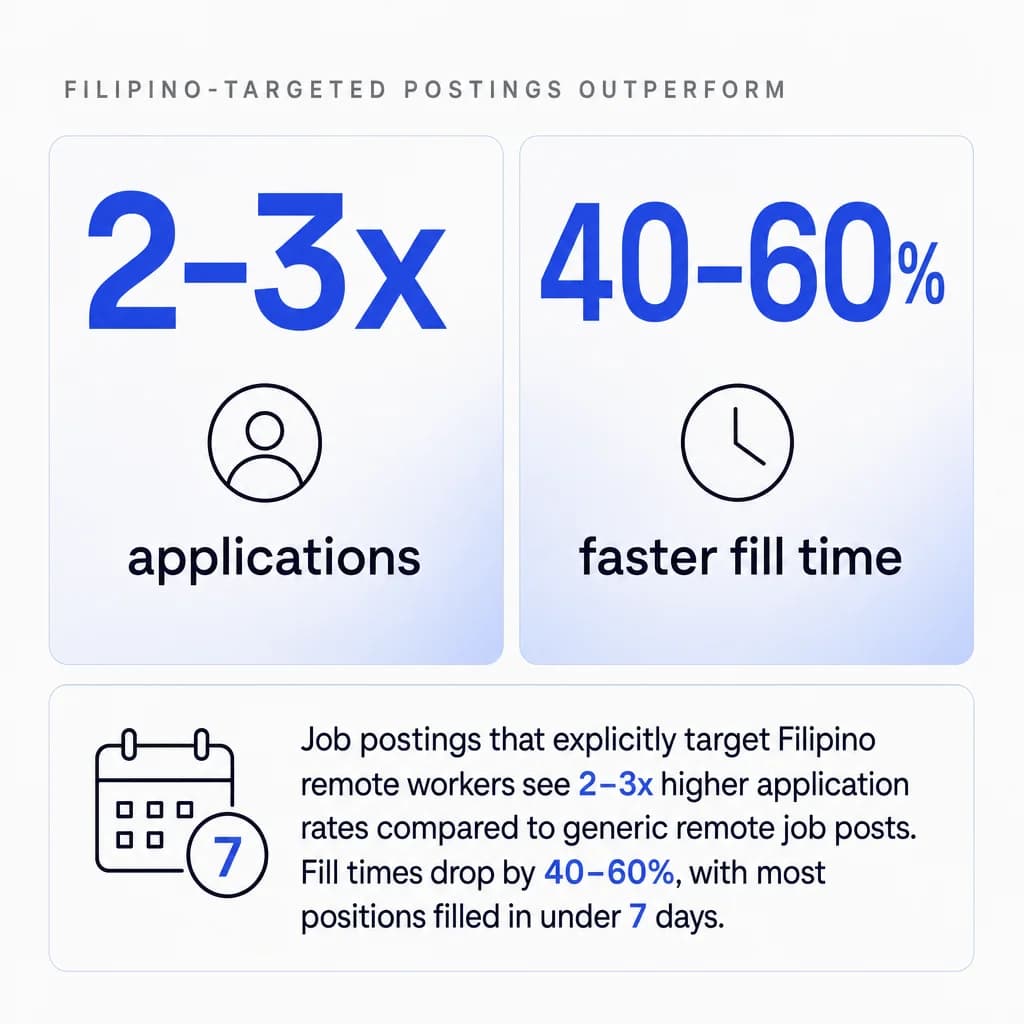
One remote work platform reported a base of more than 130,000 Filipino remote workers. The supply is there. The question is whether your operation is set up to use it properly.
Which SDR Tasks to Outsource First to a Remote Worker
If you’re building this out for the first time, start with the work that takes time but doesn’t require judgment.
Prospect research and list building. Give them your ICP. Let them pull leads from Apollo, LinkedIn Sales Navigator, or whatever you’re using. Clean lists, verified contacts, enriched data — this alone can eat hours every week from your founder or senior sales rep.
CRM hygiene. Deal stages getting stale. Contact records incomplete. Follow-up tasks slipping. A good SDR remote worker can own this.
Outreach execution. If you have sequences built in HubSpot, Outreach, Salesloft, or even a simple Gmail workflow — they can run them. Personalization at scale based on research notes they’ve already pulled.
Appointment setting and follow-up. This is often the highest-value thing they do. Turning a warm lead into a booked call is a defined process. You can train for it, script it, and measure it.
Initial qualification calls. With a tight script and a clear ICP, they can handle early-stage discovery. Not deep technical conversations — but “do you have the budget, do you have the problem, are you the right person” qualification.
These tasks are genuinely high-leverage when you’re trying to free up a founder or AE to spend their time closing.
What a Remote SDR Cannot Do and Where the Role Breaks Down
A Filipino SDR remote worker is not a substitute for sales leadership. They’re not going to own your sales strategy, write your messaging from scratch, handle complex multi-stakeholder deals, or close.
The companies that run into problems are the ones who hire an SDR expecting them to figure out the system.
They don’t have a defined ICP.
Their scripts are weak.
Their positioning is unclear.
And then they wonder why the hire didn’t work.
One recurring pattern across employer communities: remote SDRs work best when the company already has leads, scripts, and a defined workflow.
That’s not a knock on Filipino remote workers. That’s just the nature of the role anywhere in the world. An SDR without a playbook is like a delivery driver without an address. The infrastructure has to exist first.
If you have weak offer-market fit, bad lead quality, or no real sales process hiring an SDR anywhere won’t fix that.
Fix the fundamentals first.
What to Prepare Before Hiring a Remote SDR
This is where most employers underestimate the work on their side.
A clear ICP. Who is the right customer? What industry, company size, title, geography? If you can’t answer this clearly, your SDR will be guessing.
Scripts and sequences. At minimum: a cold email sequence, a LinkedIn outreach template, and a qualification call script. They don’t have to be perfect. They need to exist.
CRM access and training. Which system are you using? What does a properly updated deal look like? What’s the follow-up process?
A defined qualification framework. BANT, MEDDIC, whatever you use — write it down. Make it answerable on a call.
Feedback loops. Weekly check-ins. Call recording reviews. Sequence performance tracking. The SDRs who improve fast are the ones with tight feedback from their managers.
When you give your remote worker these things, the relationship usually works. When you skip them, it doesn’t.
Common Mistakes Employers Make When Hiring a Remote SDR
Hiring before building the system. You don’t need an SDR yet. You need a CRM and a sequence. Build those first.
Treating cost savings as the strategy. Cost efficiency is a benefit of hiring in the Philippines. It’s not a pipeline strategy. The goal is more booked calls and qualified pipeline. That’s the metric.
Under-onboarding. Remote workers in any country need context. What does your product do? Who buys it? What pain does it solve? Spending a week on proper onboarding saves months of mediocre output.
No commission or performance structure. Appointment setters and SDRs in the Philippines commonly work with commission incentives. The market associates the role with outbound volume and booked meetings. If you want strong performance, structure your compensation to reward it.
Skipping the trial. Before you commit to a full-time hire, test the candidate on real work. Give them a short prospecting task. Ask them to write three cold emails for a fictional ICP. See how they think.
How to Screen and Evaluate SDR Candidates for Remote Sales Roles
Most job posts for SDR positions are terrible. They list 15 requirements and give no context about the role, the product, or what success looks like.
If you want better applicants, write a better post. Include your ICP. Describe the tools you use. Explain what the first 30 days look like. The candidates who read carefully and respond specifically are the ones worth talking to.
When screening, ask candidates to walk you through how they’d research a prospect.
Ask them to qualify you as if you’re a lead. Ask them what they’d do if a contact goes cold after three follow-ups.
You’ll learn more from those three questions than from reading ten resumes.
One useful screening tool: ask for a short video response as part of the application. Presence, communication clarity, and energy matter in an SDR. You can’t assess those from a CV.
Why Filipino Remote Workers Are a Strong Fit for SDR Work
The Philippines has built a substantial remote-work economy, digital workers operating across time zones, familiar with Western business communication, and experienced in specialized roles beyond basic admin work.
SDR work fits that profile well. The combination of English fluency, cultural adaptability, and a large remote workforce means the talent exists. What’s often missing is the employer infrastructure to support it.
Get your system right. Give them a real playbook. Set clear KPIs around booked meetings, outreach volume, and pipeline generated. Check in consistently.
When those things are in place, a Filipino SDR remote worker can genuinely move your pipeline.
Not because it’s cheap. Because it works.