In the US, fully remote work peaked in 2023. Now it’s declining.
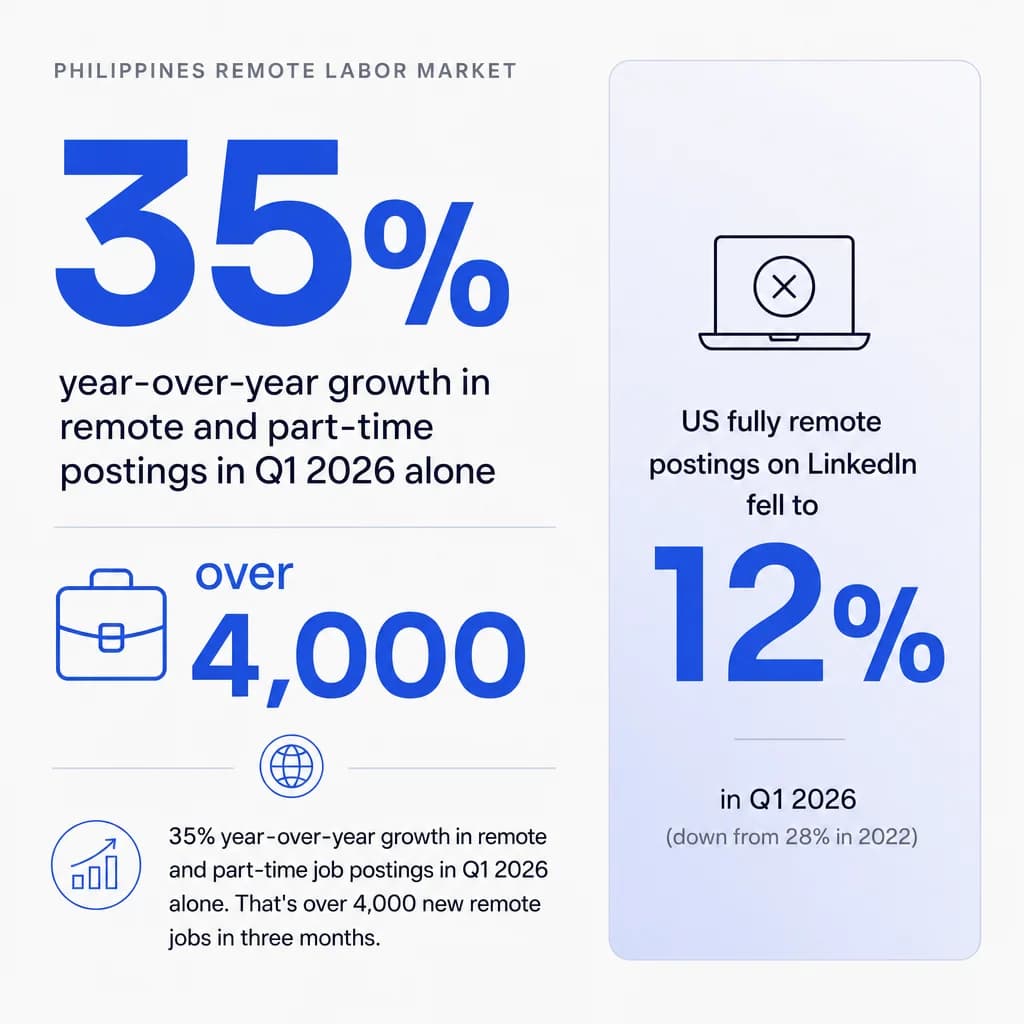
Only 12% of US jobs posted on LinkedIn in Q1 2026 were fully remote. That’s down from 28% in 2022.
Are You Looking to Hire in the Philippines and Unsure Where to Start?
Get Started
Companies like Amazon and IBM are mandating five days in the office. The “remote work revolution” everyone talked about? It’s mostly dead in developed countries.
But the Philippines? 35% year-over-year growth in remote and part-time job postings in Q1 2026 alone. That’s over 4,000 new remote jobs in three months.
The US has about 17 million fully remote workers right now. That number is dropping.
The Philippines added thousands of remote positions while the rest of the world went backwards.
What’s Actually Happening in the Philippines
The Philippine government extended a work-from-home mandate in March 2026 for a full year.
They banned companies from laying people off or cutting headcount because of it.
Why? An energy crisis.
Fuel shortages from geopolitical issues hit the Philippines hard. Power outages became common.
The government realized something: if everyone commutes to offices, fuel prices spike even more.
Work from home became the practical solution.
BPO companies (call centers, customer support operations) had to adapt. They couldn’t bring everyone back to offices even if they wanted to.
So they didn’t.
The Job Categories That Are Growing
ICT and AI roles make up 12.4% of new listings. Call center and customer support jobs are 13.9%. Administrative roles are 11.8%.
These aren’t just any jobs. They’re the exact roles global companies need filled.
The Most In-Demand Remote Roles
-
Data analysts
-
Customer service representatives
-
Executive assistants
-
Social media managers
-
Shopify specialists
These are the kinds of work that don’t need to happen in an office.
Why AI Is Creating More Remote Jobs, Not Fewer
AI created a weird situation. Companies need human-in-the-loop workers—people who check AI outputs, train models, and handle edge cases.
Flexible, part-time, remote work is perfect for this.
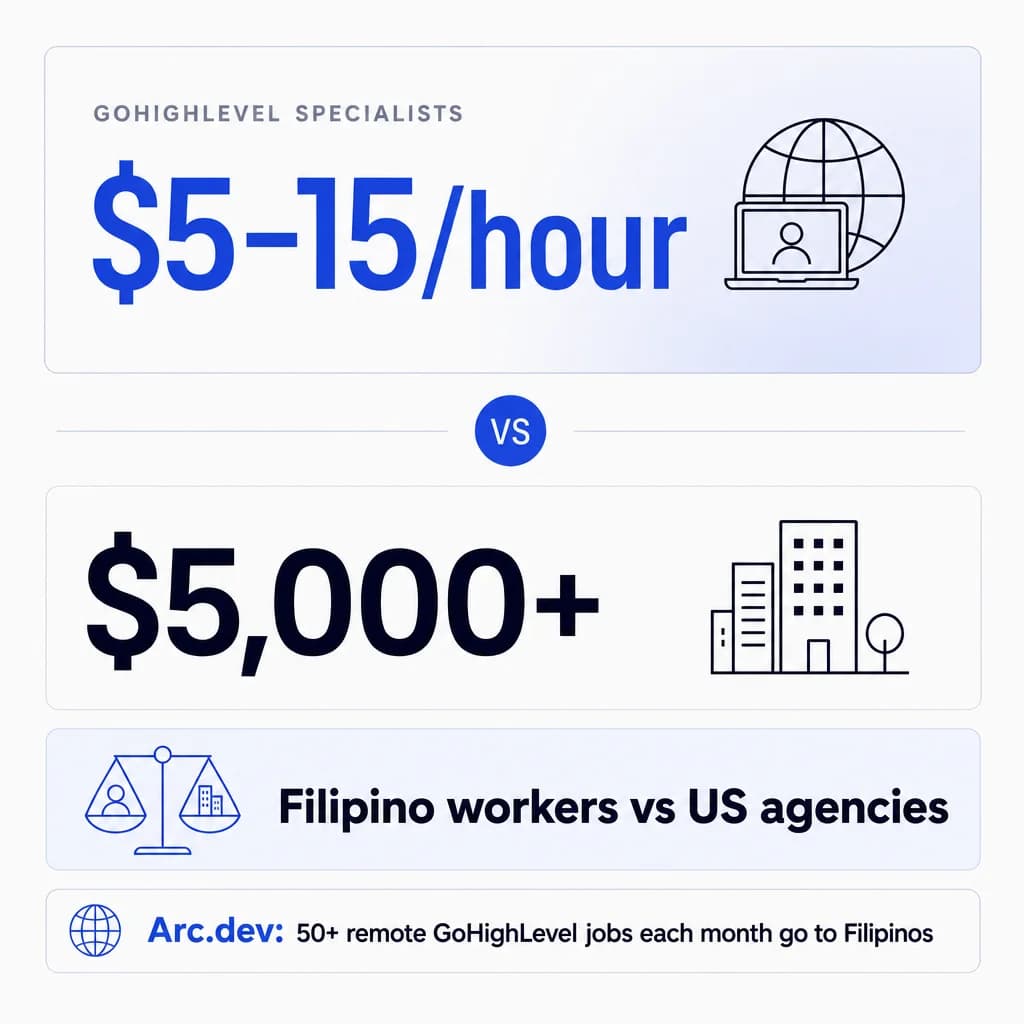
The Philippines has high English fluency (about 90% of workers), reasonable rates ($5–15/hour compared to $30+ in the US), and a workforce that’s already adapted to remote work.
Why Global Companies Keep Hiring Filipino Remote Workers
US and UK clients make up 80% of Filipino remote worker employment on major platforms.
The Timezone Advantage Nobody Talks About
The timezone works. The Philippines is 13 hours ahead of EST. When US business owners wake up, their Filipino team has often already put in half a day.
This enables 24/7 coverage without night shifts in the US.
One business owner posted: “US bosses love us. We have 24/7 overlap, 90% English fluency, and loyalty. My rates went up 20% year-over-year because demand is insane.”
Retention Rates That Beat Domestic Hires
Client retention is reported at 95% by multiple workers—higher than most domestic hires.
The happiness index in the Philippines is 6.04 out of 10. Workers average 42.25 hours per week. They value family time more than climbing corporate ladders.
This makes them stable, long-term hires.
The Platform Numbers Back This Up
-
JobStreet reported a 35% surge in part-time remote roles. AI and data roles saw 50% increased demand.
-
Upwork says the Philippines is the top country for remote admin and support hires. 25% of global jobs in these categories go to Filipino workers.
-
Average hourly rate on Upwork for Filipino workers: $8–12.
How to Actually Hire Filipino Remote Workers
If you’re reading this and thinking “I should hire someone,” here’s what works.
Start With the Right Platforms
Start with platforms built for this. HireTalent.ph lets you post jobs and review reviewed candidate profiles without the trial-and-error of general freelance sites.
You’re looking at a pool of workers who already have the infrastructure (backup power, reliable internet, proper equipment).
The Screening Process That Works
-
Do a video interview on Zoom. Always.
-
Give a practical test. For example: a Google Sheet task and a Canva task—show me what you can do.
-
Check their English skills in conversation, not just written messages.
-
Ask about their home setup: Do they have backup power? What’s their internet speed? About 80% of serious remote workers in the Philippines now have UPS systems.
What to Pay and How to Structure It
-
Entry-level admin work: $4–6/hour
-
Skilled work (Shopify management, CRM administration, basic design): $8–15/hour
-
Full-time equivalent: $800–2,000/month
You’re typically hiring them as 1099 contractors. No benefits are required.
Use a simple contract. Specify tools (Slack, Asana, etc.).
Specify hours (40 hours per week is standard).
Most workers have equipment, but if you want them on specific software or need better specs, cover it upfront.
Set clear KPIs, e.g., “95% of tasks completed on time.”
Why This Matters Right Now
Global companies are shrinking remote work opportunities.
The Philippines is expanding them.
The Arbitrage Opportunity
This creates a massive arbitrage opportunity. You can hire experienced, English-fluent workers for a fraction of US costs while competitors fight over a shrinking domestic remote talent pool.
The Philippine government is supporting this with policy. The energy crisis forced adaptation. The workforce is proven.
The Simple Math
If you need to scale customer support, administrative work, or specialized tasks like social media management, the math is simple.
A $50,000/year US hire costs $4,166/month plus benefits. A Filipino remote worker doing the same job costs $1,200–2,000/month, no benefits required.
You can hire three people for the cost of one. Or pocket the savings.
The Bottom Line
Remote work isn’t dead. It’s just moving.
While US companies force return-to-office mandates, the Philippines is building the world’s largest remote workforce.
-
35% growth in remote jobs
-
Government support
-
Proven retention rates
-
English fluency
-
Timezone advantages
You can either ignore this trend or use it.
Start small. Hire one person for a specific task.
If you’re looking for reviewed talent profiles with verified skills and equipment, HireTalent.ph streamlines the entire process so you’re not sorting through hundreds of unqualified applications.
Give them a two-week trial. See what happens.
Most employers I’ve seen report 3x ROI within three months.
The Philippines is growing remote work while everyone else retreats from it. That’s not going to last forever.
But it’s happening right now.